
Conservation Safaris in East Africa
The parks, forests and communities guests come to see are not simply scenery for a holiday. They are living places.
A considered safari takes their rules, rhythms and people seriously. That begins in the planning. A gorilla trek is shaped by permit availability and ranger direction; a route is shaped by distance, season and where a night is best spent. Those choices affect the experience as much as the itinerary itself.
We use Land, Wildlife and People as a straightforward way to talk through those choices. The focus is on what is real for a particular journey, rather than broad promises that a safari alone cannot prove.
A Safari Has a Context Beyond the Game Drive
A good route respects the ground it coversLand
Travel in East Africa crosses long distances and varied landscapes. The route should leave time for what matters, rather than treating every park as a box to tick. When we discuss a lodge or transfer, we look at the practical reality: where it sits, the season, how it connects to the next stop, and whether the pace works for the guests. Those details are part of travelling with care. The Uganda destination guide sets out how the parks actually connect.
Wildlife viewing has its own etiquetteWildlife
A safari depends on patience and the conditions on the day. Sightings are never a promise, and in protected areas rangers and park rules set the terms of an encounter. For gorilla and chimpanzee trekking, a pre-trek briefing explains the group, timing and behaviour expected. We build the rest of the journey around that reality, including the possibility of uneven ground, weather or a longer walk.
The people around a place matter to its storyPeople
A safari can introduce guests to some of the people whose work and knowledge give a place its character: guides, rangers, lodge teams, craftspeople and community hosts. When a guest wants to include a community visit or cultural experience, we discuss it in the context of the route and their interests, not as a compulsory add-on. The Maa Trust is worth reading on how that works around the Mara.
What We Do Beyond the Journey
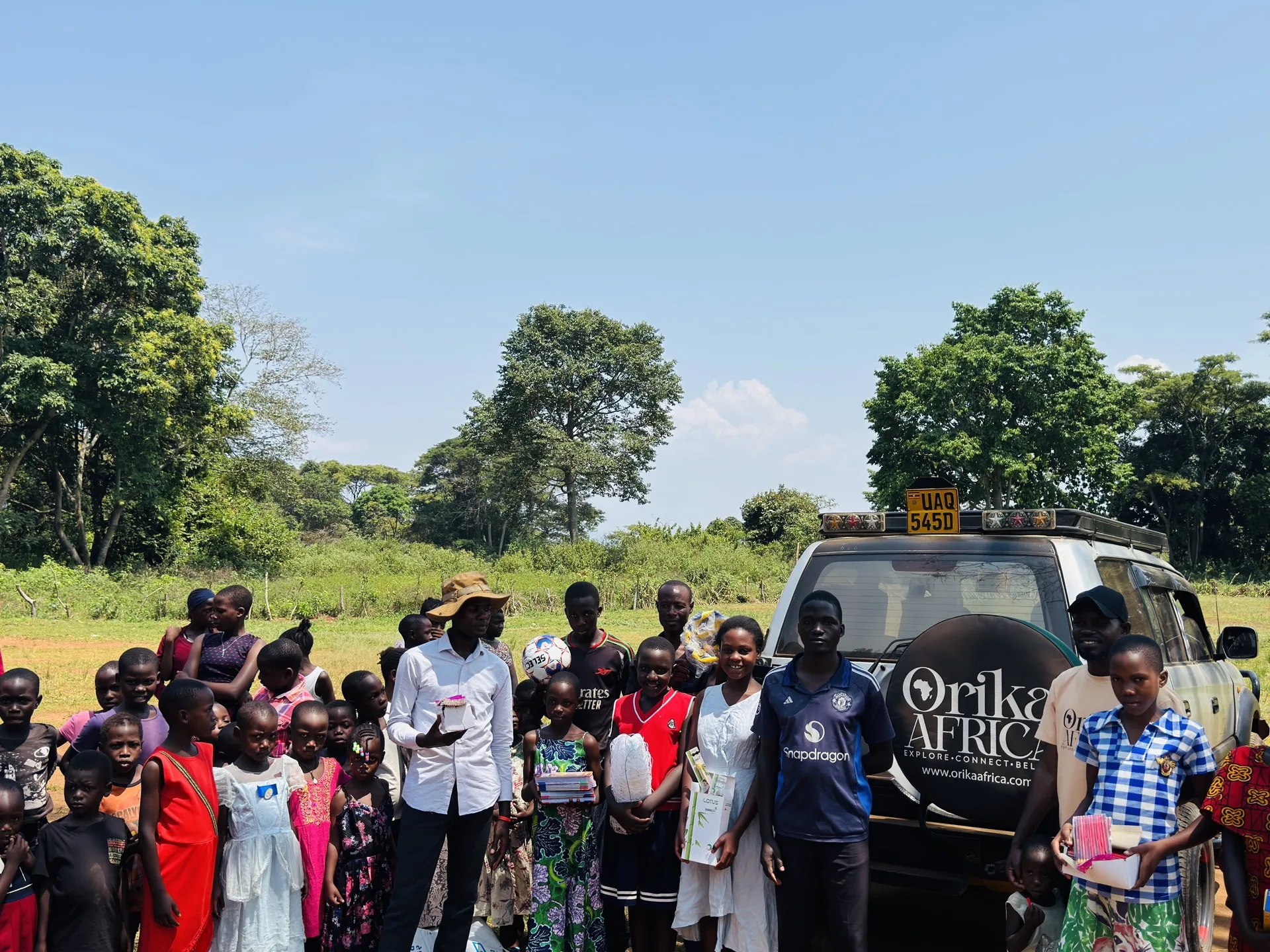
The children who grow up beside Uganda's lakes and parks are their future guardians. We support a school on the shores of Lake Victoria with the things a term actually runs on: exercise books and pens, footballs and kit for co-curricular activities, and tree planting on the school grounds.
The trees are the part that lasts longest. A seedling planted by a child who comes back the next term to find it taller teaches something about time and care that a lesson cannot deliver as directly.
When a child learns the name of a bird, understands why gorillas matter, or hears a guide speak proudly about their work, that curiosity becomes care, and care becomes action that outlasts any safari.
Begin with a Route That Makes Sense
Tell us what you hope to see and how much time you have. We will help you weigh the places, permits and pace.