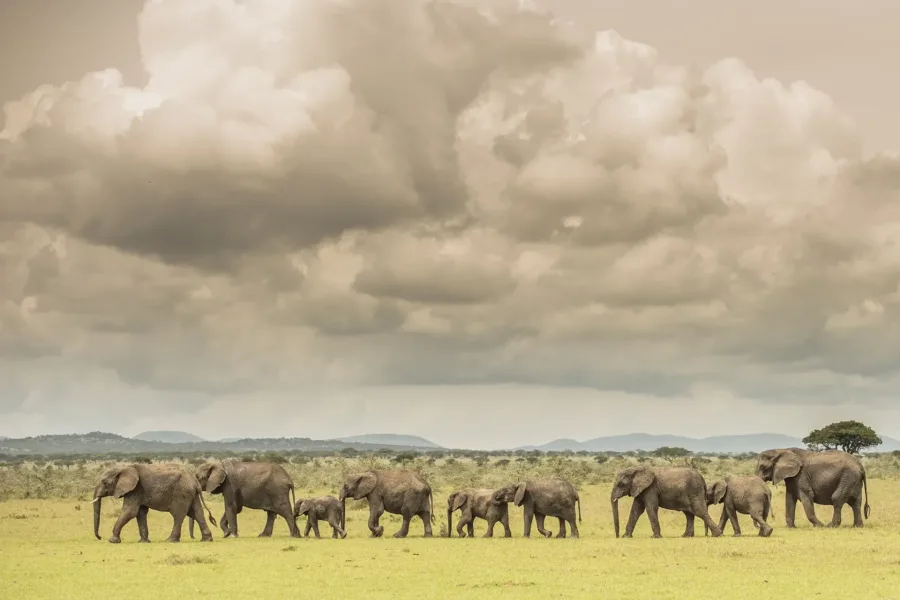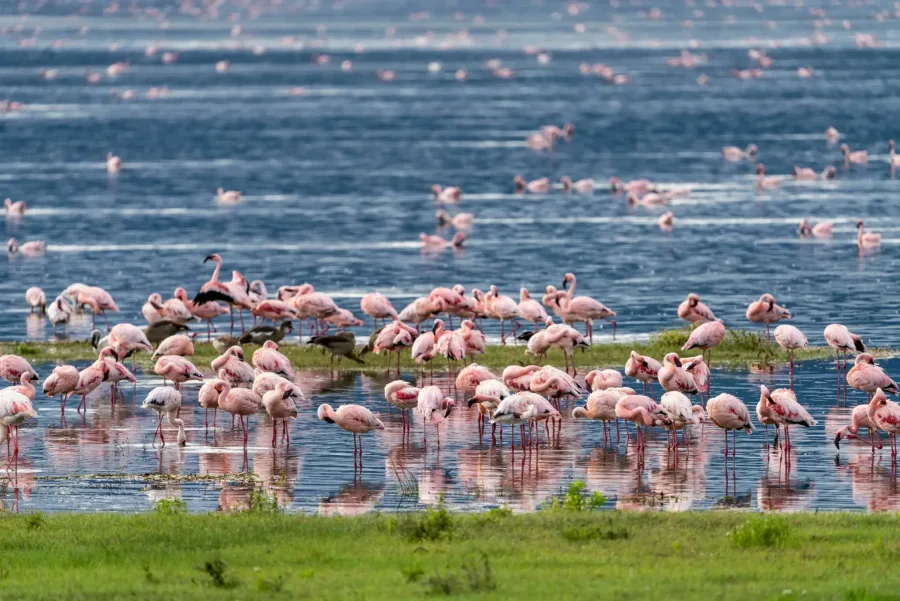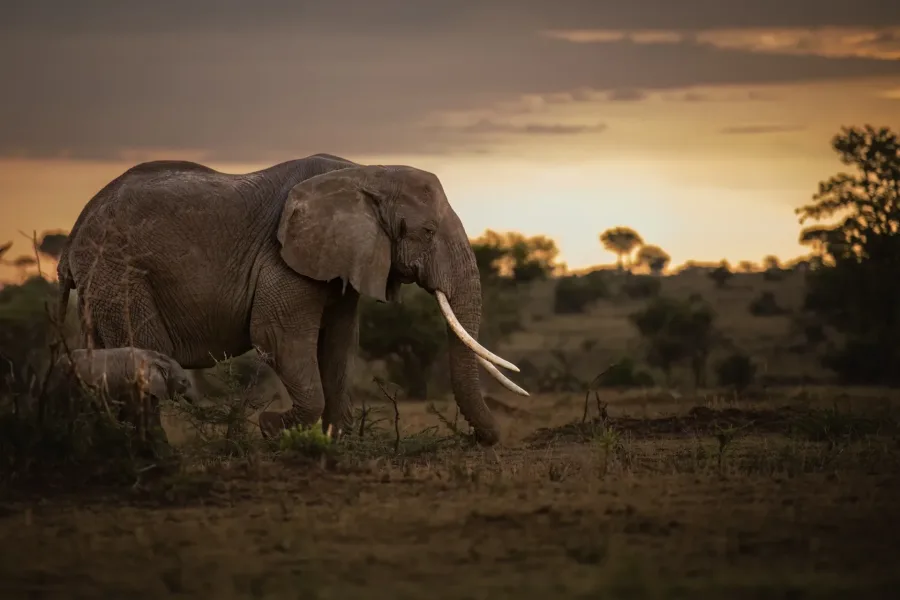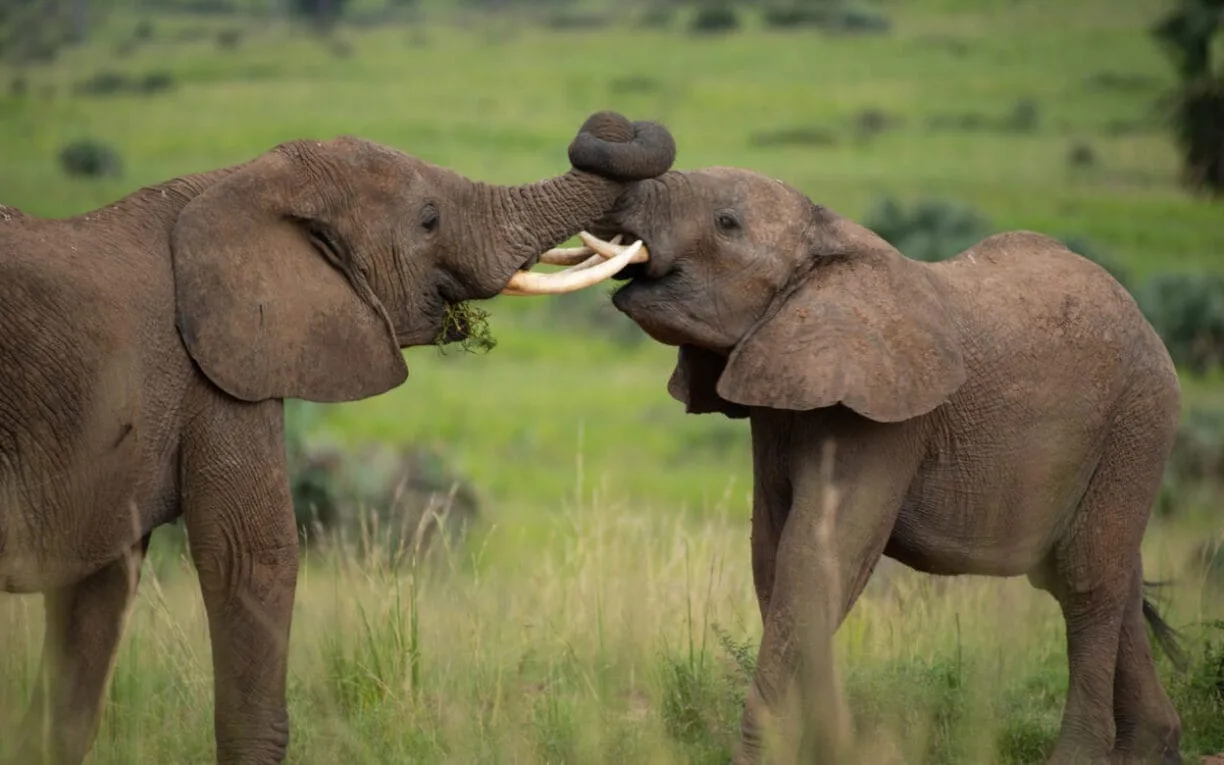
Serengeti National Park is Tanzania’s oldest and most famous park, protecting 14,763 km² of open savannah, woodland, and kopjes (granite outcrops) in northern Tanzania. A UNESCO World Heritage Site and part of the Serengeti-Mara ecosystem, the world’s largest intact migratory route, the Serengeti is synonymous with African wildlife.
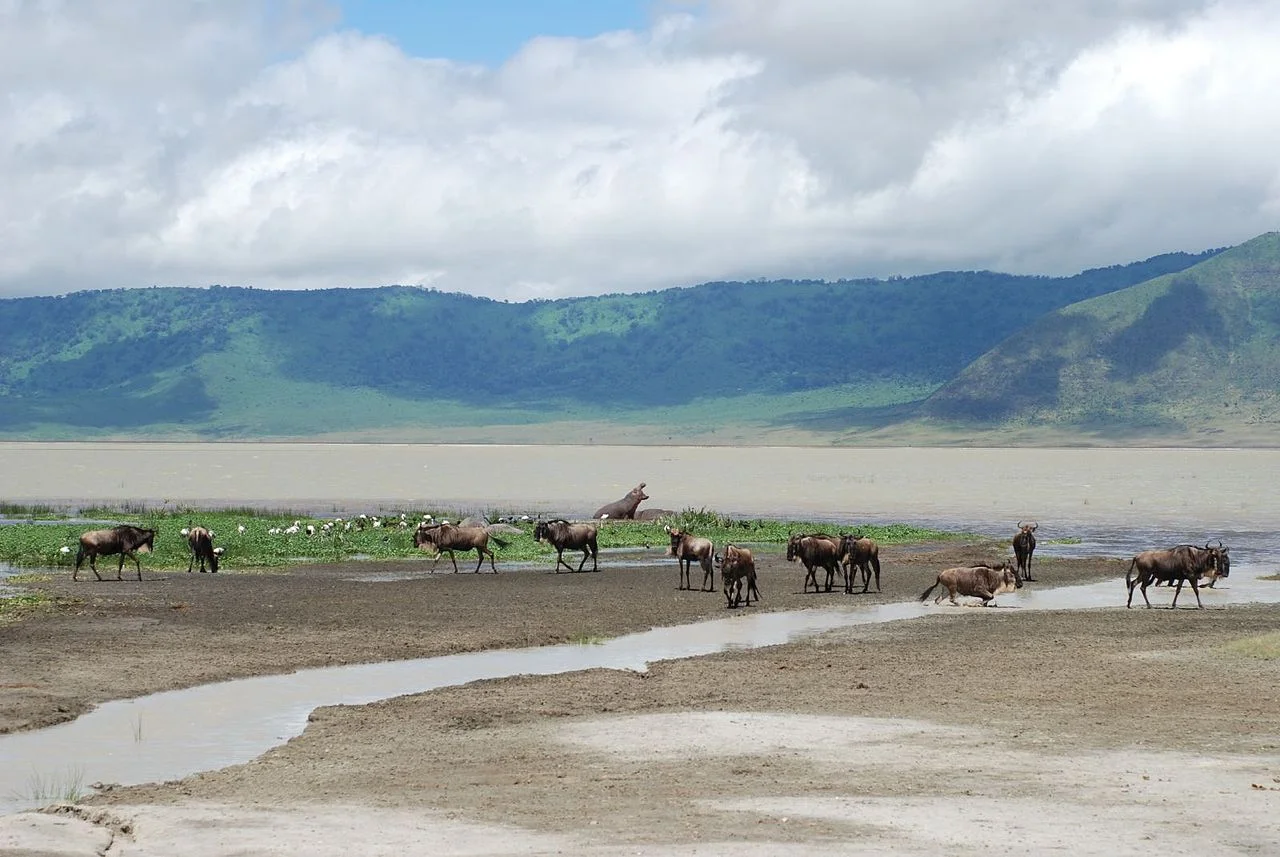
The Great Wildebeest Migration follows a clockwise loop of roughly 800 km driven entirely by rainfall and grass growth. In January and February, the southern Serengeti’s short grass plains around Ndutu host the calving season, some 400,000 wildebeest calves born over just three weeks, drawing lions, cheetahs, and spotted hyenas in remarkable concentrations. Between July and October, the herds move north into the Mara and the famous Grumeti and Mara River crossings unfold.
The Serengeti supports the largest lion population in Africa, estimated at 3,000 individuals. Resident prides are well-studied and reliably encountered on game drives. The park is also one of the best places in Africa for cheetah viewing, particularly in the open southern plains where their speed has full expression.
Hot air balloon safaris at dawn over the Serengeti are among Africa’s most celebrated experiences, drifting silently over herds as the rising sun turns the savannah gold.
The Seronera Valley at the park’s heart is the year-round wildlife hub. The northern Serengeti (Lobo) and the Ndutu area in the south offer superb game viewing across different seasons.