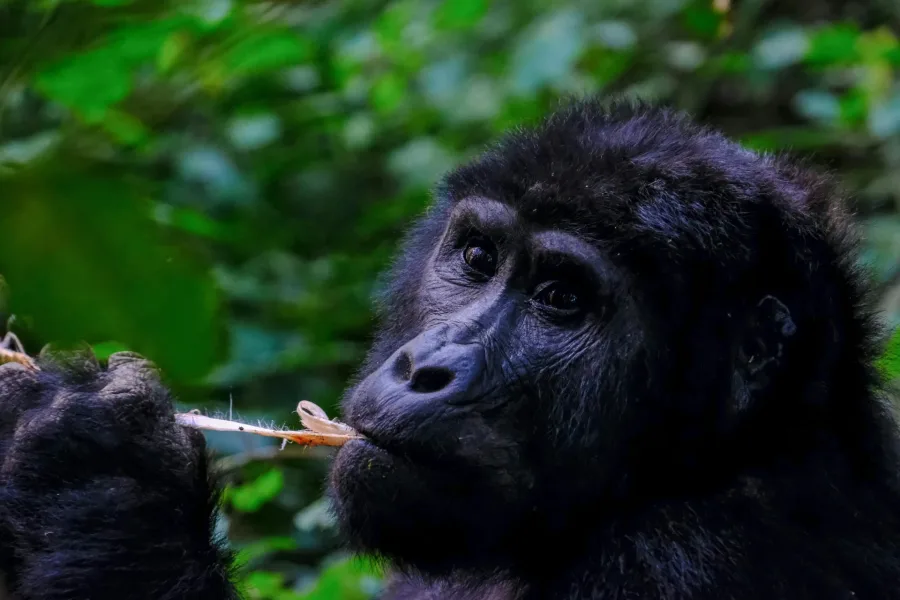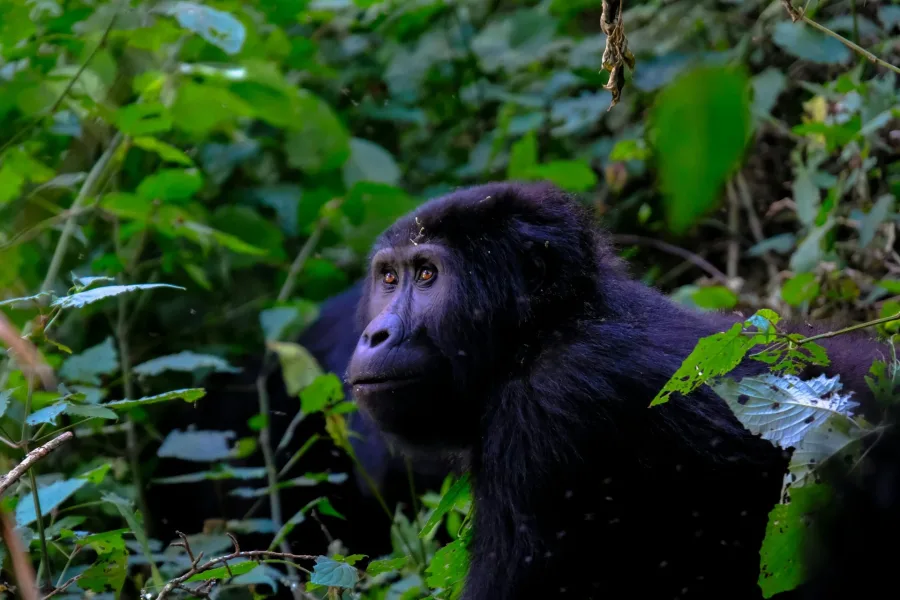
Bwindi Impenetrable National Park sits in the Albertine Rift of southwestern Uganda, spanning the Kanungu, Rubanda, and Kisoro districts near the border with the Democratic Republic of Congo. Covering 331 km² (128 square miles) of ancient montane forest that has stood for more than 25,000 years, it is a UNESCO World Heritage Site and home to nearly half the world’s remaining mountain gorillas. The 2018 Bwindi-Sarambwe census counted 459 individuals in 36 social groups, part of a global population of 1,063.
Beyond the gorillas, four smaller primates are the ones you actually see, usually from the trail on the walk in: black-and-white colobus, blue monkey, red-tailed monkey, and the mountain monkey, a dark guenon with a white beard that forages on the ground rather than in the canopy. Birding is the forest’s quieter triumph: more than 350 species, including Albertine Rift endemics such as the African green broadbill and Rwenzori turaco. Bwindi’s full mammal list runs to roughly 120 species, but most are elusive forest animals that even resident guides rarely see. Dense canopy, steep ridges, and fern-lined understorey give the forest its “impenetrable” character, and conservation work by the Uganda Wildlife Authority and partner organisations continues to protect it from habitat loss and poaching.
What to experience
Gorilla trekking
Gorilla trekking is the heart of any Bwindi journey. Permits are issued by the Uganda Wildlife Authority at $800 per person for foreign non-residents, and must be secured in advance, especially for June to September and December to February. Groups are limited to eight guests per habituated family, led by trained guides.
Treks typically last one to six hours depending on where the family has nested. Terrain can be steep and muddy, so moderate fitness, sturdy boots, and long sleeves are essential. Once you reach the group, you spend one hour observing them at close range: feeding, grooming, playing, and moving through the forest.
Gorilla Habituation Experience
The Gorilla Habituation Experience extends the encounter to up to four hours with a family still being acclimated to human presence, usually over a two-to-three-year research process. Families are selected for habituation based on how close they range to the park boundary and how they respond to people. It offers a deeper window into behaviour and fieldwork than a standard trek, under the same safety rules.
Batwa cultural encounters
The Batwa, Bwindi’s original forest inhabitants, share traditional knowledge through cultural walks: music, crafts, medicinal plants, and the history of life in this forest before park boundaries were set.
Trekking guidelines
To protect both guests and gorillas: keep at least seven metres (about 23 feet) distance, wear a face mask during the encounter, avoid direct eye contact, speak quietly, do not touch wildlife, and follow your guide at all times. Masks matter more than most guests expect. Gorillas share enough of our biology to catch human respiratory infections, and a cold that inconveniences you can kill an infant gorilla. If you are unwell on the morning of your trek, tell us: we will do everything we can to move your permit rather than have you go up sick.
Pack sturdy hiking shoes, long trousers and sleeves, a rain jacket, hat, sunscreen, insect repellent, and water. Porters are available at every park entrance and will carry your pack for the day.
Best time to visit
Bwindi can be visited year-round. The dry seasons (June to September and December to February) offer firmer trails and clearer views, though rain is always possible in a true rainforest. See our guide to the best time for gorilla trekking in Uganda.
Bwindi gorilla trekking sectors
Bwindi has more than twenty habituated gorilla families spread across four trekking sectors, and your permit is tied to one sector. Choosing well shapes both the trek and the lodge base:
- Buhoma: the northern sector and the original one, home to the Mubare, Habinyanja, and Rushegura families. Generally the gentlest terrain, strong lodge choice, good for first-time trekkers
- Ruhija: higher, quieter ridges to the east, excellent for birders combining forest walks with gorilla day
- Rushaga: the densest cluster of habituated families in the south, and home to the gorilla habituation experience
- Nkuringo: the steepest profiles, dramatic valley views, best for fit hikers
We match sector to fitness, timing, and how you want to combine Bwindi with Mgahinga Gorilla National Park or Lake Mburo National Park on the drive in.
Are there chimpanzees in Bwindi?
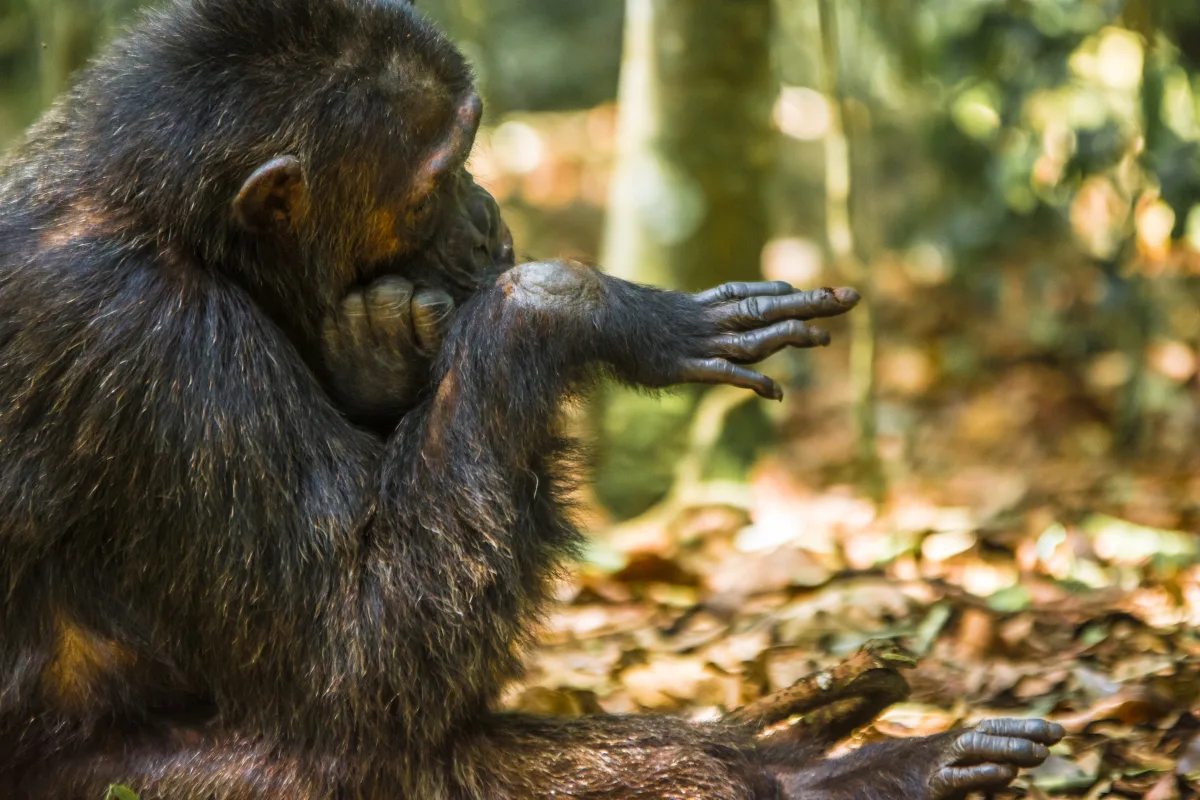
Chimpanzees appear on Bwindi’s official species list, but no group has been habituated and there is no chimpanzee tracking in the park. In practice guests do not see them. If chimpanzees are on your list, we route you through Kibale Forest National Park, where the Kanyanchu community has been habituated for decades and sightings are close to reliable. The two parks pair naturally on a southwestern circuit, and it is the itinerary we build most often for guests who want both great apes.
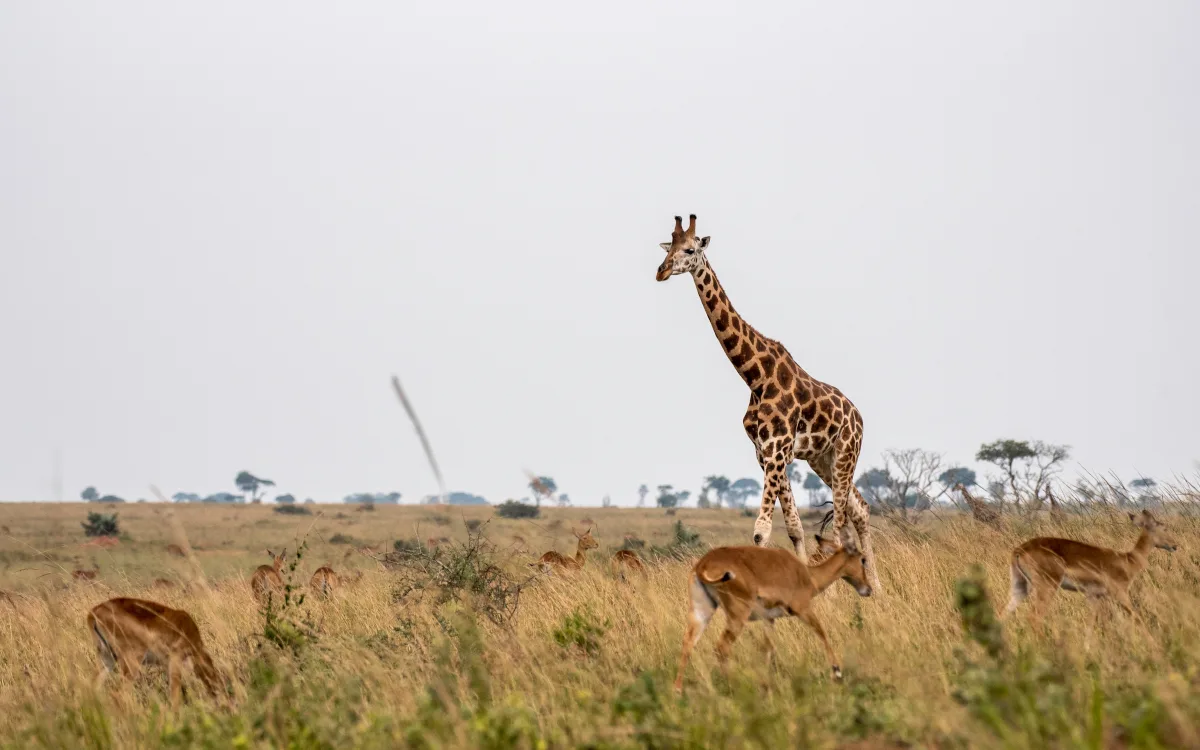
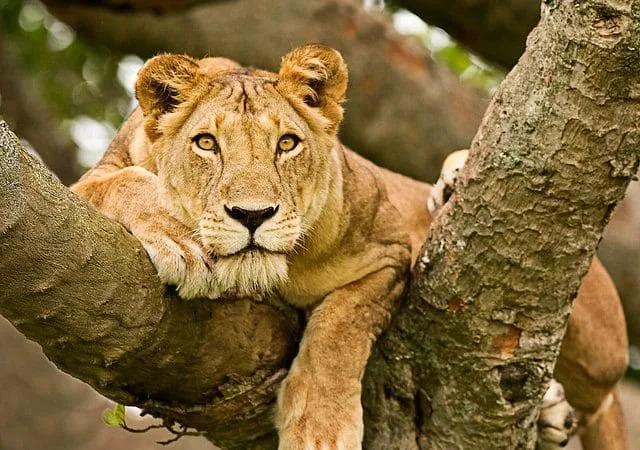
Bwindi is a gorilla and forest-primate destination, not a big game one. There are no lions, elephants, or plains wildlife to see here. If big game matters to you, we pair Bwindi with Queen Elizabeth National Park or Lake Mburo on the same itinerary.
How hard is gorilla trekking in Bwindi?
Most guests need moderate fitness: several hours on uneven, sometimes muddy ground with rest breaks. Buhoma suits first-timers and older travellers. Nkuringo demands stronger hill fitness. Porters are worth booking in advance rather than arranging at the trailhead. Tell us honestly about knees, altitude comfort, and pace so rangers can favour a closer family when possible.
Getting there
By road, Bwindi is roughly 8 to 10 hours from Kampala or Entebbe, depending on your starting point and which sector you are trekking. Domestic flights from Entebbe International Airport to Kihihi or Kisoro airstrips cut the journey dramatically, with a short lodge transfer afterwards. Kihihi serves Buhoma and Ruhija; Kisoro is the closer airstrip for Rushaga and Nkuringo. We arrange gorilla permits as part of every Uganda safari and can pair Bwindi with Mgahinga or Kibale on a southwestern circuit. Read more in the Uganda destination guide.