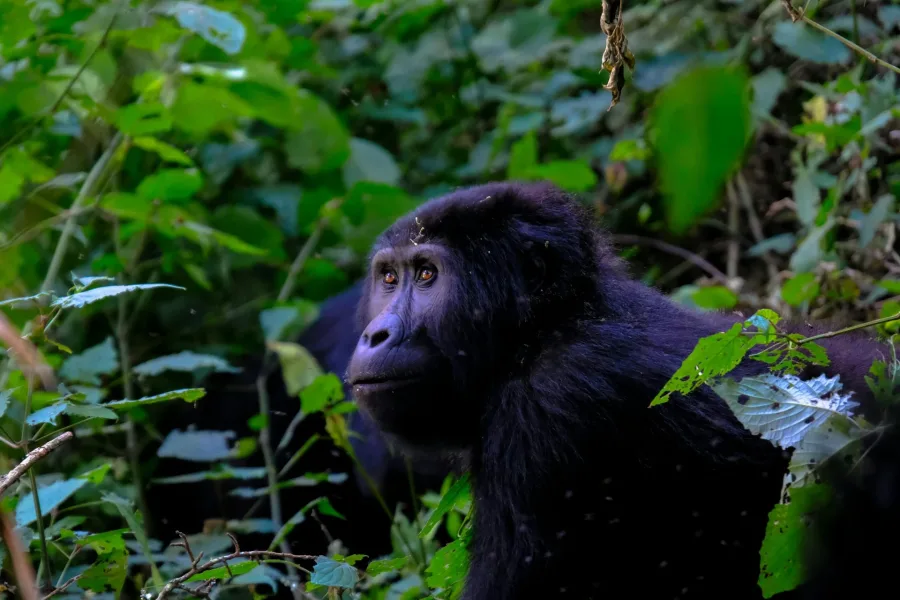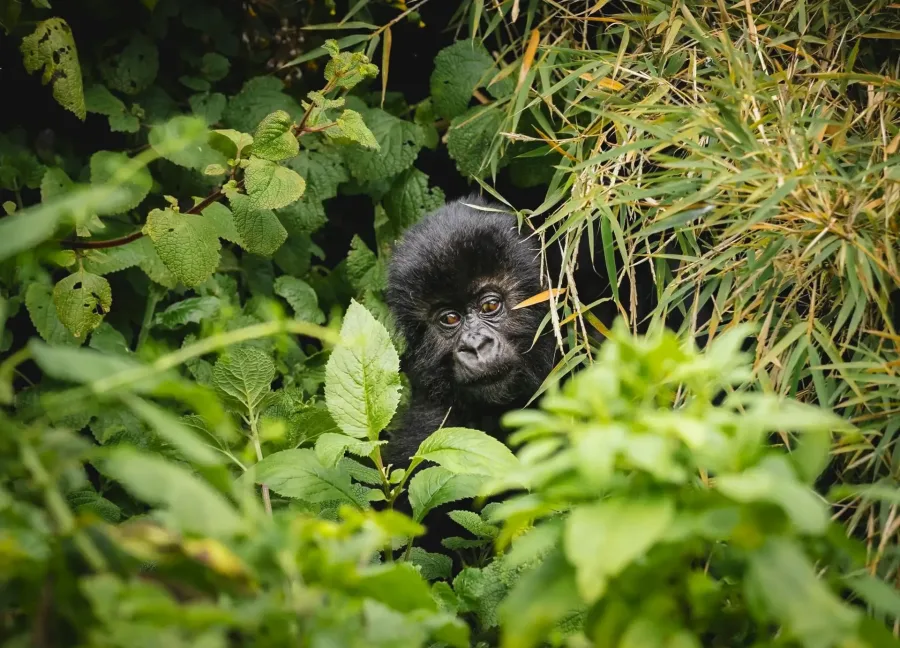
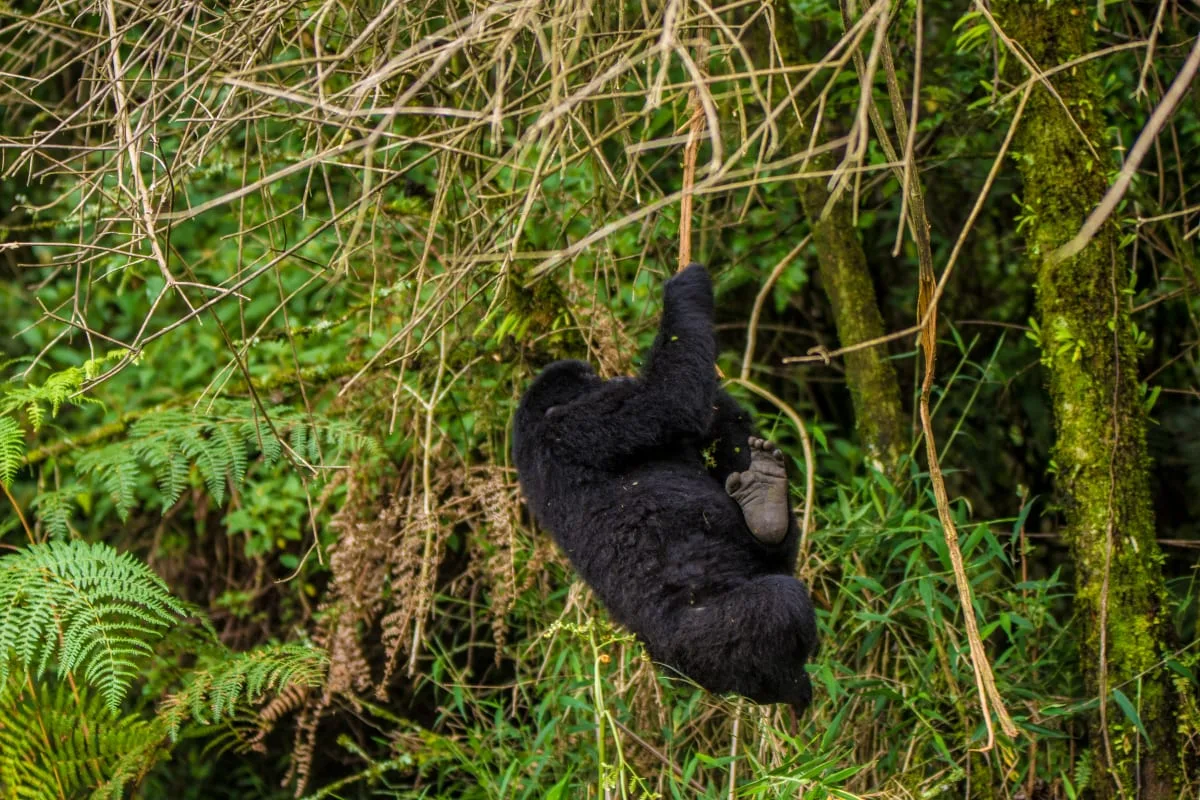
Gorilla trekking in Uganda takes place in two national parks in the far southwest: Bwindi Impenetrable National Park, which has four trekking sectors, and Mgahinga Gorilla National Park, on the slopes of the Virunga volcanoes. A permit costs USD 800 per person, or USD 600 in April, May and November, and buys one hour with a habituated gorilla family once the group finds them.
The rest of this guide takes the decisions in the order they need to be made: the park and sector, the permit, the season, your fitness and the route.
Where can you trek gorillas in Uganda?
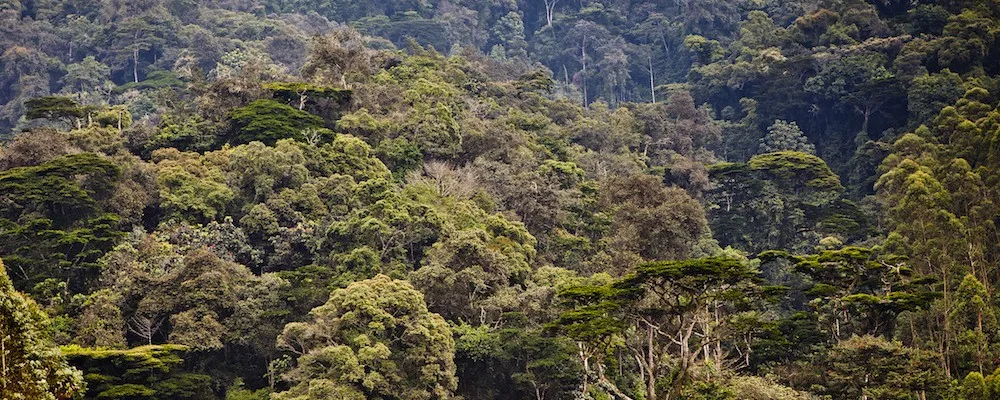
Most treks happen in Bwindi Impenetrable National Park. The Uganda Wildlife Authority puts Bwindi’s population at approximately 459 mountain gorillas, almost half of those left in the world. The forest is steep, dense and often wet underfoot, which is why the sector on your permit matters as much as the date.
Mgahinga Gorilla National Park is Uganda’s smallest park and has one habituated gorilla group that moves across the border with Rwanda and Congo. Guests usually choose it when golden monkeys and the volcano scenery matter as much as the gorillas, or when the route already runs through Kisoro.
Bwindi’s four trekking sectors
Every Bwindi permit is tied to one sector, and you stay near that sector the night before the trek. The sectors are far apart by road, so moving between them is a journey rather than a short transfer.
- Buhoma, in the north, is the most established sector and suits a first trek or a route arriving from Queen Elizabeth National Park.
- Ruhija, to the east, sits on higher ridges and is worth considering when forest birding matters alongside the gorillas.
- Rushaga, in the south, works well with a route through Kisoro or a second trek in Mgahinga.
- Nkuringo, also in the south, has steeper terrain and wide valley views, and suits guests comfortable with a demanding hill walk.
No sector can promise a short walk, because the gorilla family decides the distance. The sector shapes the approach, the lodge area and the drive, not the outcome of the day.
What does a gorilla permit cost?
| Permit | Price per person |
|---|---|
| Uganda gorilla trek | USD 800 |
| Uganda gorilla trek, April, May and November | USD 600 |
| Gorilla habituation experience, Bwindi | USD 1,800 |
| Rwanda gorilla trek, Volcanoes National Park | USD 1,500 |
The permit is set by the Uganda Wildlife Authority and confirmed when it is issued. At the moment the lower rate applies in April, May and November, which are also among the wetter months. The habituation experience is a different activity, with up to four hours alongside a family still becoming used to people, and our guide to the gorilla habituation experience explains who it suits. For how the permit sits inside the full cost of a trip, see what a gorilla trekking safari costs.
What happens on a trekking day?
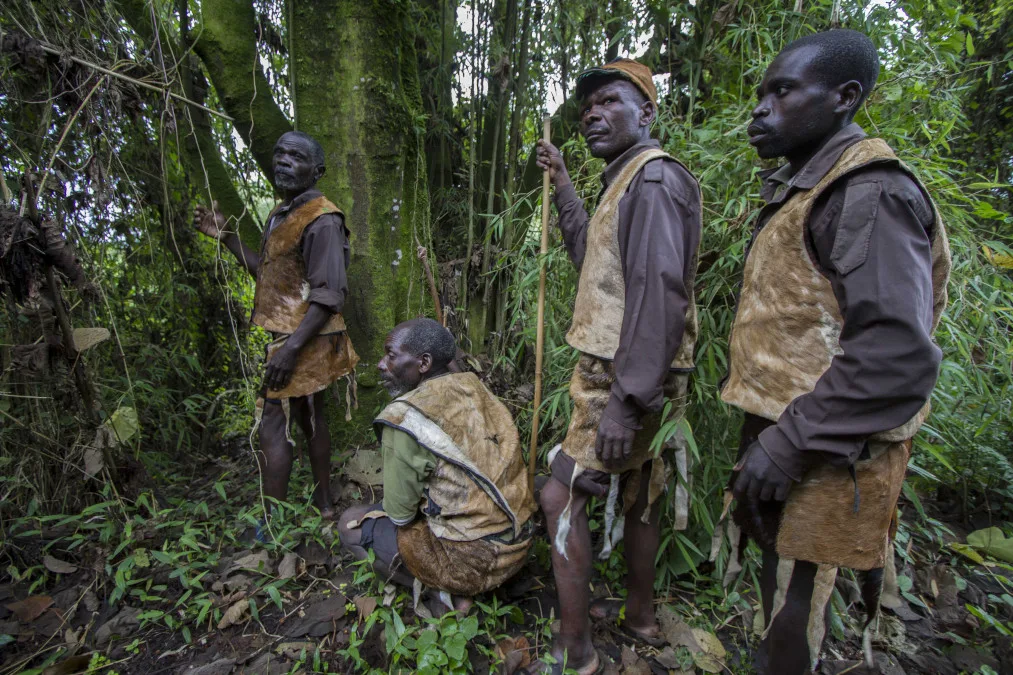
The day starts early with a ranger briefing at the sector headquarters, where the group is assigned a gorilla family. Trackers go ahead to find where the family nested, and the group follows with a ranger guide.
The Uganda Wildlife Authority advises allowing two to seven hours for the whole activity, including the walk. Once the family is found, you have one hour with them. The rules are set out at the briefing: visitors must be at least 15 years old, keep 10 metres away from the gorillas, speak quietly, and must not trek with a cold or other respiratory illness, which can pass to the gorillas.
How fit do you need to be?
Moderate fitness is enough for most guests: several hours on uneven, muddy and sometimes steep ground, with rest stops. Walking poles, waterproof boots and long sleeves make a real difference, and our safari packing list covers the rest.
Porters can be hired at the trailhead to carry a day pack and help on the steeper sections. It is worth doing even if you feel you do not need it, because it keeps the walk about the forest rather than the weight on your back.
When is the best time for gorilla trekking in Uganda?
Trekking runs all year. The drier months, usually June to September and December to February, tend to make the trails firmer. April, May and November are wetter and bring the lower permit rate, and permits are often easier to secure. Rain is possible in any month in a rainforest. Our guide to the best time for gorilla trekking in Uganda goes through each season in detail.
Getting to the gorilla parks
By road, Bwindi and Mgahinga are a long drive from Kampala or Entebbe, and the time depends on the sector and the road conditions. Scheduled flights from Entebbe shorten it considerably: Kihihi airstrip is generally used for Buhoma and Ruhija, and Kisoro for Rushaga, Nkuringo and Mgahinga. A road transfer to the lodge follows either way.
Most guests combine the gorillas with other parks. Chimpanzees in Kibale and game drives in Queen Elizabeth sit naturally on the way south, and our guide to chimpanzee trekking in Uganda covers the forest option that most often pairs with Bwindi.
Uganda or Rwanda for gorilla trekking?
Rwanda’s Volcanoes National Park is closer to Kigali’s airport and its permit costs USD 1,500. Uganda’s permit is cheaper and Bwindi has more sectors and families, but the travel is longer. Neither is the better trek in general; the right one depends on your time, budget and the rest of the route. Our Uganda vs Rwanda comparison sets out what actually differs.
Which journey suits you?
A focused trip can centre on a single trek, as on the 4 Days Gorillas of Uganda, which flies to Bwindi and back. Guests who want a second encounter with a different family can trek twice, as on the 6 Days Uganda Gorilla & Wildlife Safari. Every journey that includes a gorilla trek is listed on our gorilla trekking tours page, and each one is private and customisable to your dates.